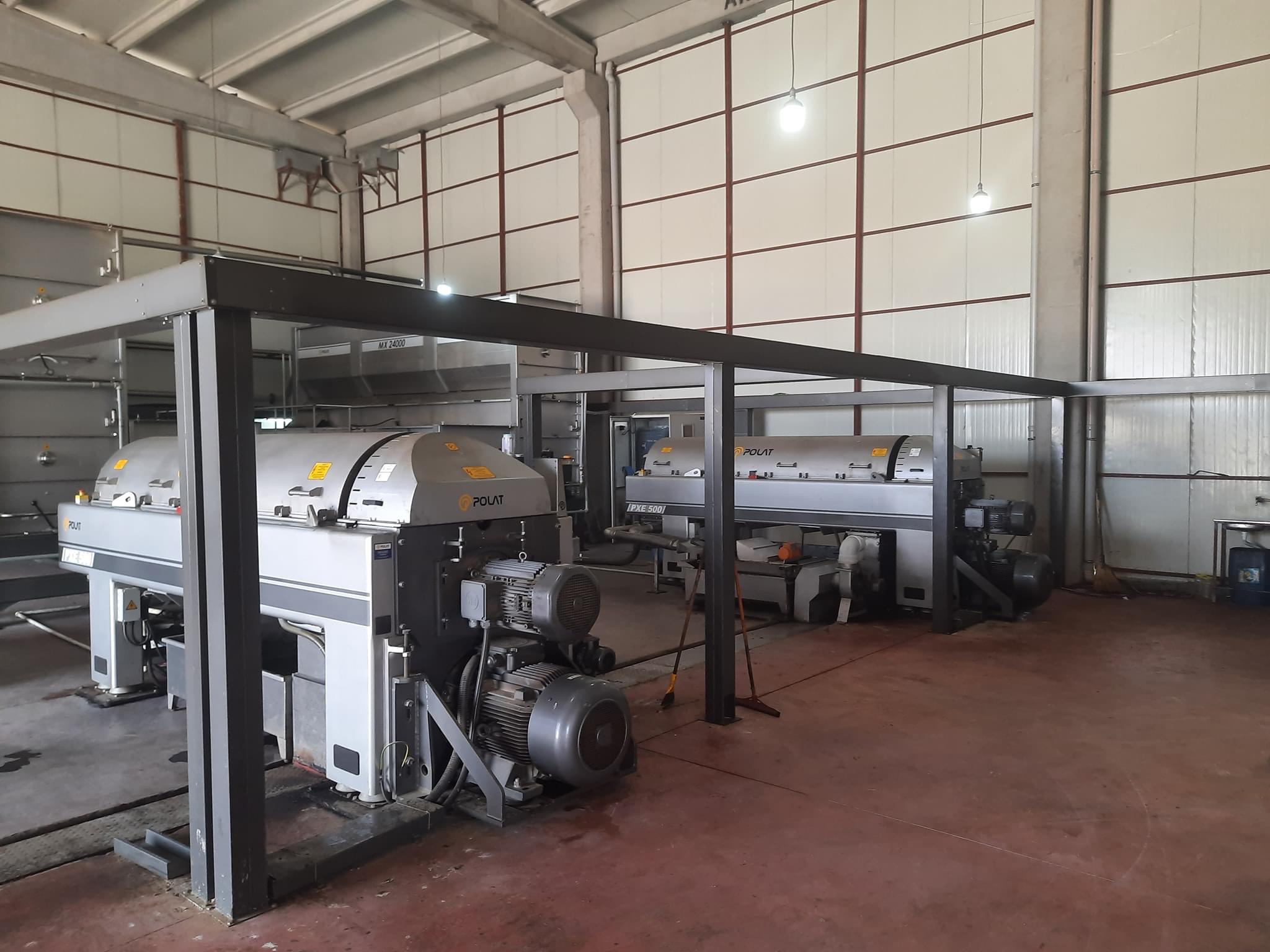
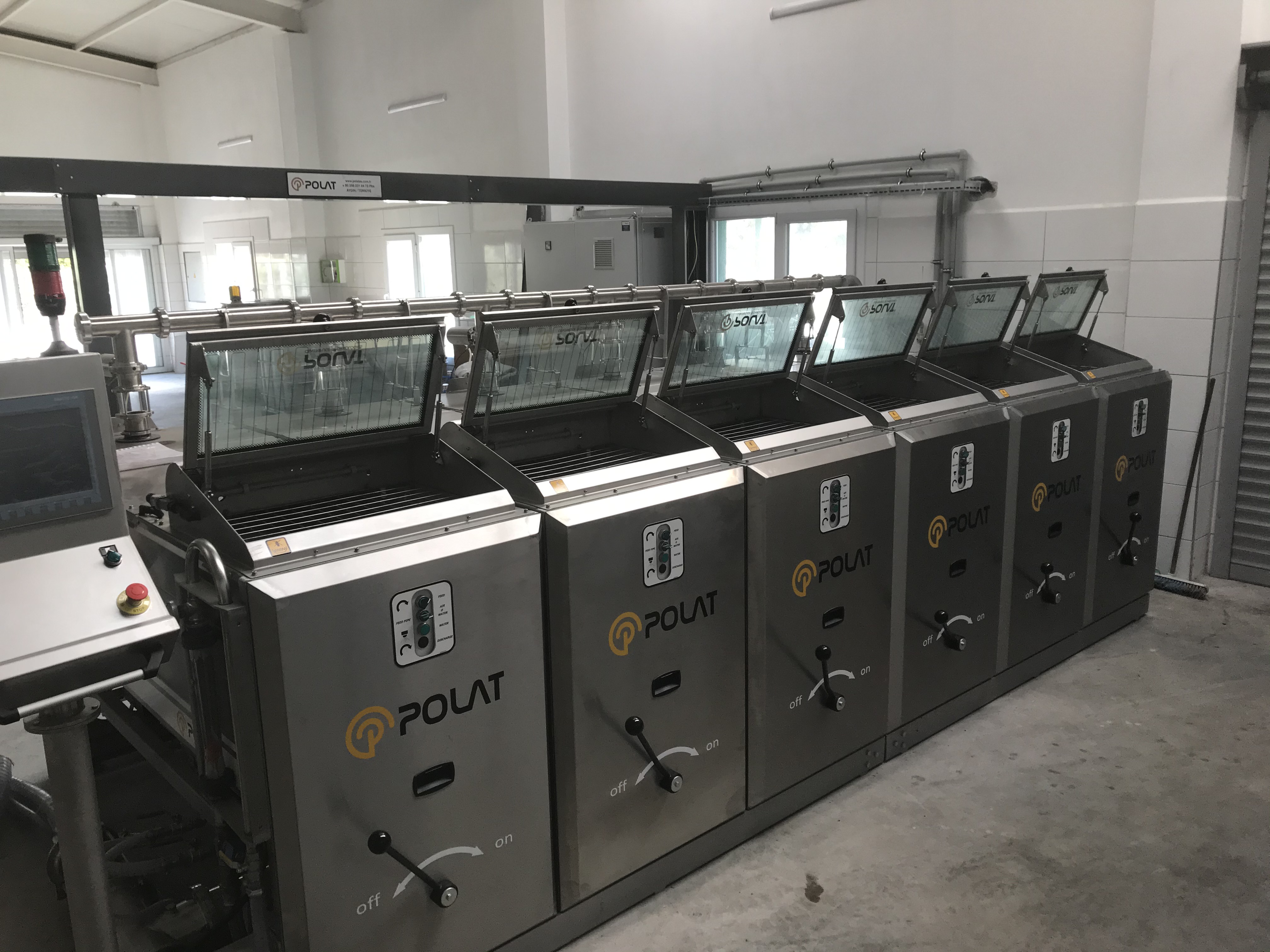
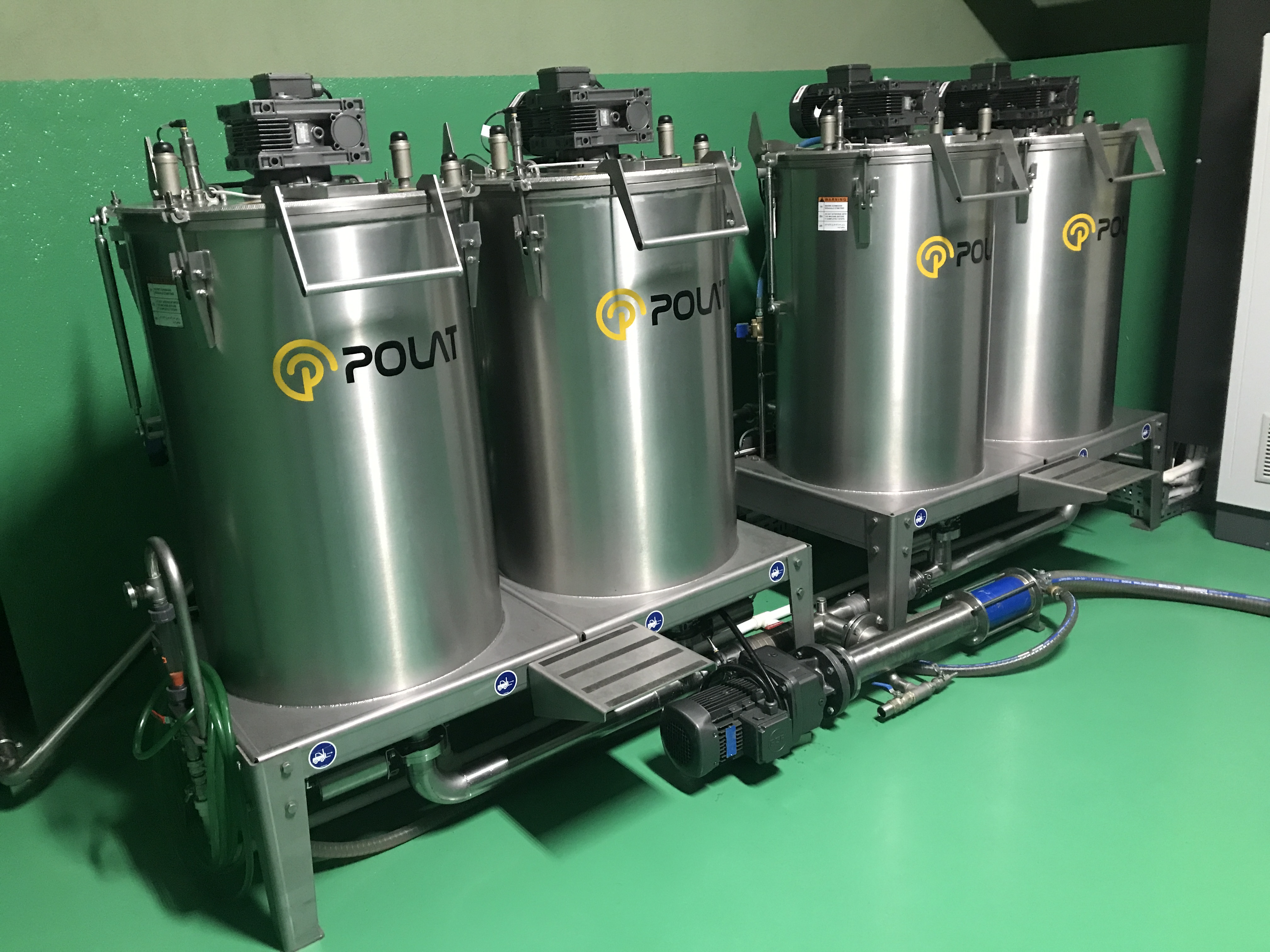
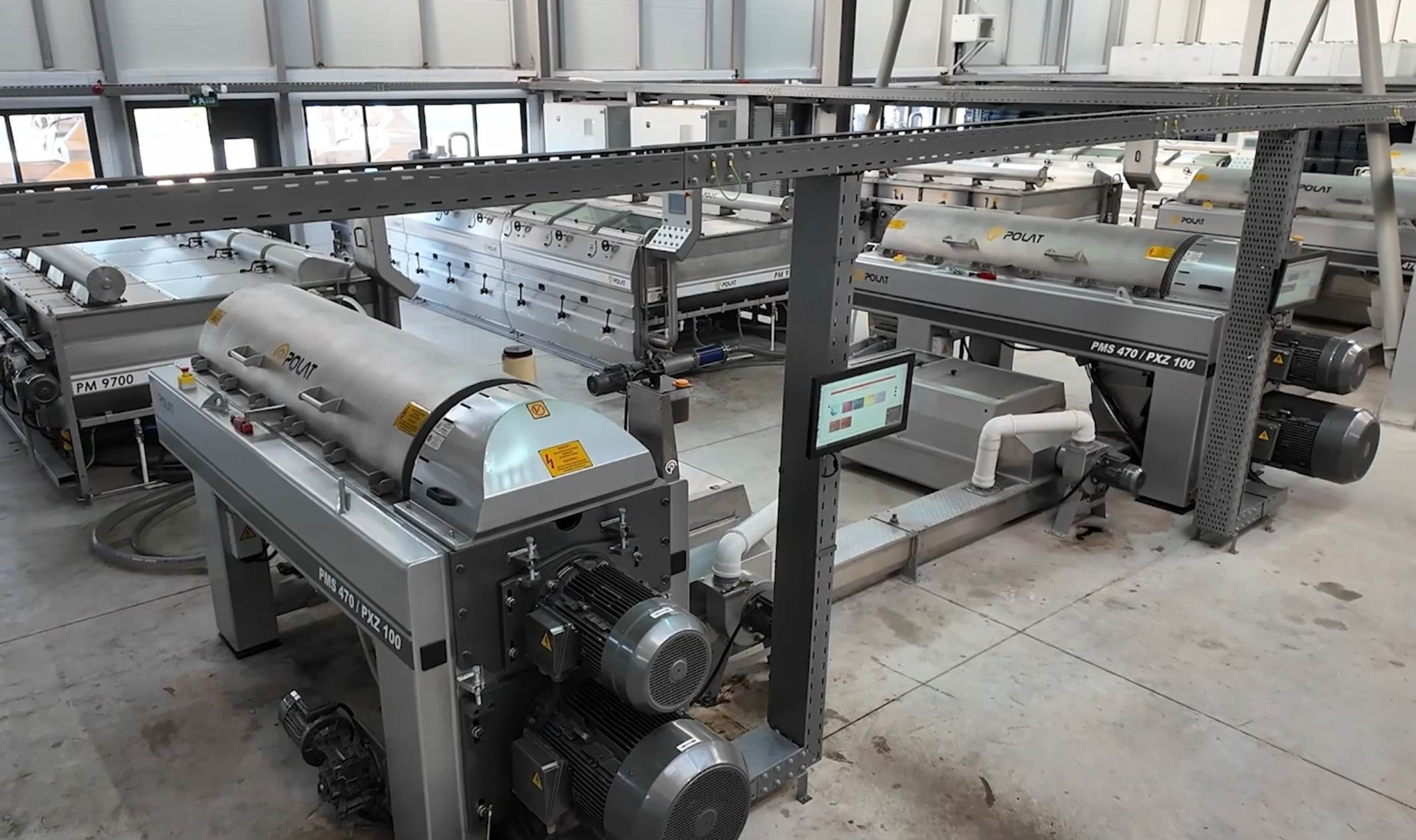
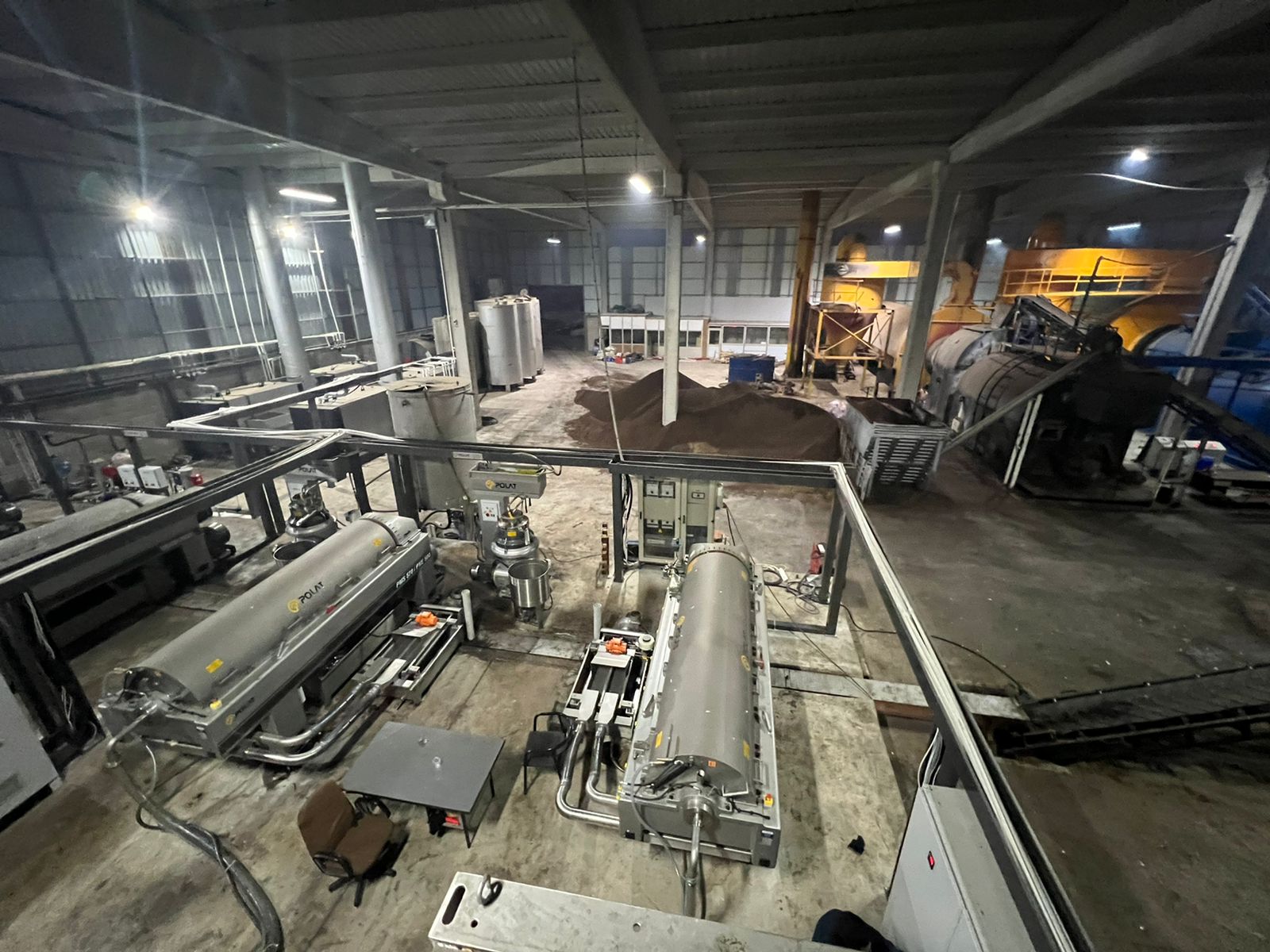
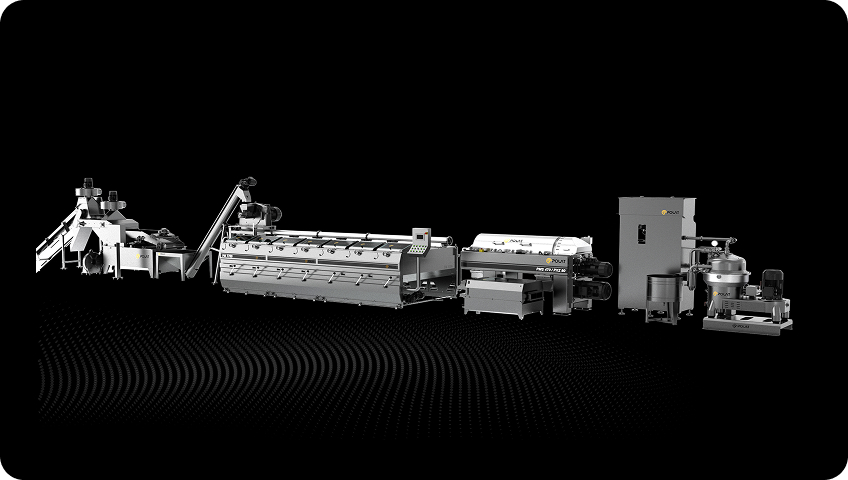
In order to reclaim the high-volume wet pomace (2-phase and 3-phase waste) generated by olive oil producers and cooperative members in the Eastern Mediterranean region through eco-friendly methods, a massive pomace plant project with a total processing capacity of 1,000 tons/day has been implemented.
The primary objective of the project is to efficiently separate the residual pomace oil and dry matter from the pomace using two Polat Makina heavy-duty decanters integrated into the facility, each with a capacity of 500 tons/day—generating additional income for cooperative members while preventing regional environmental pollution to establish a fully-fledged circular economy model.
Technical Process and Heavy-Duty Decanter Engineering
To handle a massive pomace load of 1,000 tons per day and guarantee continuous operation, specialized centrifuge parameters were implemented on the line:
Dual Line Structure and High Capacity: Two 500 tons/day decanters operating in parallel within the plant ensure continuous and flexible operation during peak harvest season. The lines can be operated independently or simultaneously at full capacity according to demand.
Wear-Resistant Heavy-Duty Components: Due to its nature, olive pomace contains a high proportion of pit fragments and abrasive solid particles. For this reason, the decanter bowl and scroll surfaces are reinforced with tungsten carbide and specialized hardfacing armor.
Secondary Extraction via High Torque and G-Force: Thanks to high centrifugal force, even the last remaining oil droplets trapped within the pomace matrix are separated. This maximizes residual pomace oil recovery.
Eco-Friendly Phase Separation and Pellet Feedstock: Dewatered dry pomace (pomace cake) obtained after extraction reaches a dryness level suitable for direct shipment as fuel feedstock to biofuel (pellet/pomace briquette) production plants.
Key Deliverables and Added Value
Maximum Oil Recovery: The residual oil within the pomace—the regional olive oil sector's largest waste issue—has been reclaimed into industry (soap, feed, and technical oil sectors) as value-added pomace oil.
Regional Logistics and Storage Advantage: Thanks to the high processing capacity of 1,000 tons per day, waste from surrounding olive oil mills was processed rapidly without waiting or undergoing fermentation.
Zero Waste and Biomass Energy: The separated dry pomace was utilized as pellet fuel and converted into renewable energy, replacing the use of fossil fuels.