
The Journey from Olive to Oil
Olive Reception and Preparation Phase
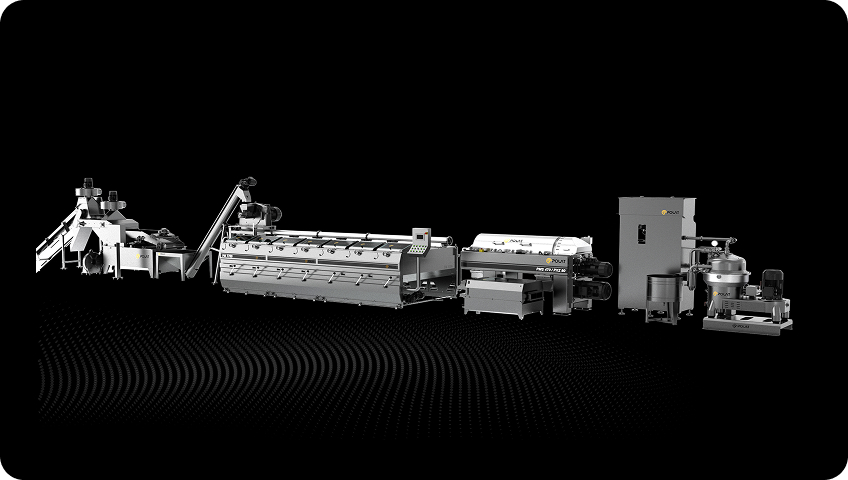
Continuous olive oil processing systems are advanced technologies that integrate every stage—from the moment olives are harvested and delivered to the facility, up to the final phase where the oil exits the disc stack separator—into a unified operational flow.
Polat Makina continuous olive oil systems are engineered to isolate olives from foreign matter without manual handling and to produce superior-quality extra virgin olive oil. Driven by innovations in sensors, proprietary software, and automation technologies, these systems continue to advance every day.
Olive oil is extracted purely through mechanical means under strictly controlled conditions utilizing centrifugal force. In full compliance with cold extraction standards and product-specific processing requirements, the natural aromatic profile, flavor characteristics, and nutritional values of the olive fruit are preserved. The core objective of continuous systems is to extract oil with maximum yield while safeguarding its organoleptic attributes, maintaining hygienic production standards, and delivering a high-value final product centered around the philosophy of "olive oil for health."
How Does the Process Begin?
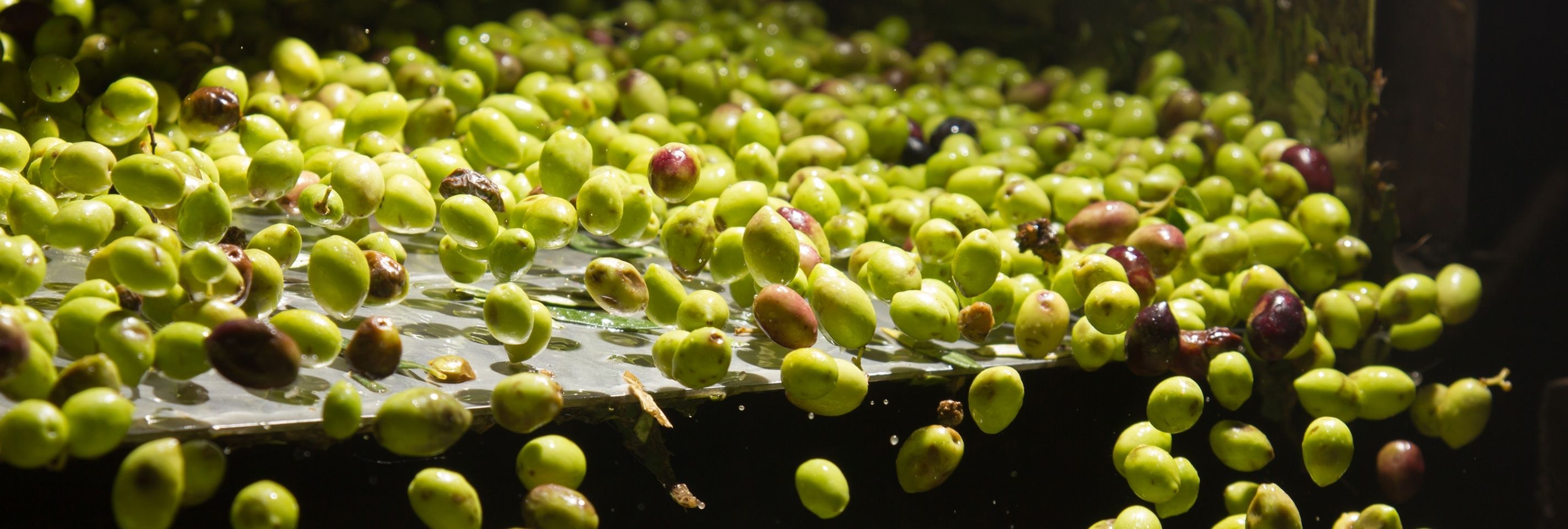
Olives delivered to the facility are unloaded into the olive reception hopper and conveyed to the washing machine via an inclined belt conveyor. Without damaging the fruit, olives are first de-leafed and then thoroughly washed to remove all foreign matter.
Malaxation and Centrifugal Separation Sequence
Crushing Stage: Cleaned olives drop into the crusher hopper and are transferred into the crushing chamber via augers. Once crushed, the olives are transformed into a homogeneous paste ready for malaxation.
Kneading (Malaxation): The crushed olive paste is pumped or screw-conveyed into the malaxer chambers. Under operator-defined time and temperature parameters tailored to the olive variety and quality, the paste is kneaded to optimize oil droplet coalescence.
Separation (Decanter): The prepared paste is fed into the horizontal decanter centrifuge via a heavy-duty cavity pump. (If required in 3-phase processing, process water addition is regulated via flowmeter control.)
In 2-Phase Systems: High centrifugal forces inside the decanter divide the olive paste into two streams: high-purity olive oil and wet pomace (incorporating vegetable wastewater).
In 3-Phase Systems: The system separates the paste into three distinct phases: olive oil, vegetable wastewater (karasu), and dry pomace. Immediately at the decanter oil outlet, a vibrating screen removes coarse particulate matter.
Polishing, Storage, and Automation Control
While the oil transfer pump moves the extracted oil into the separator buffer tank, the pomace is transferred to the pomace silo or storage pit via a screw conveyor or piston pump. Inside the high-speed disc stack separator, the olive oil is cleared of micro-sediments to achieve brilliant clarity, rendering it ready for consumption.
Upon process completion, the premium extra virgin olive oil is transferred into stainless steel resting/storage tanks or directed straight to final packaging and bottling lines.
Technical Infrastructure & Utilities:
Thermal energy required across the facility is supplied by a central boiler system. The entire continuous process is precisely monitored and controlled in real time by the operator through a user-friendly, PLC-controlled touchscreen automation panel.
The Polat Makina team helps you select the most suitable machinery for your production needs by answering your questions. Continue production with confidence.