
What Color Is Your Water Footprint?
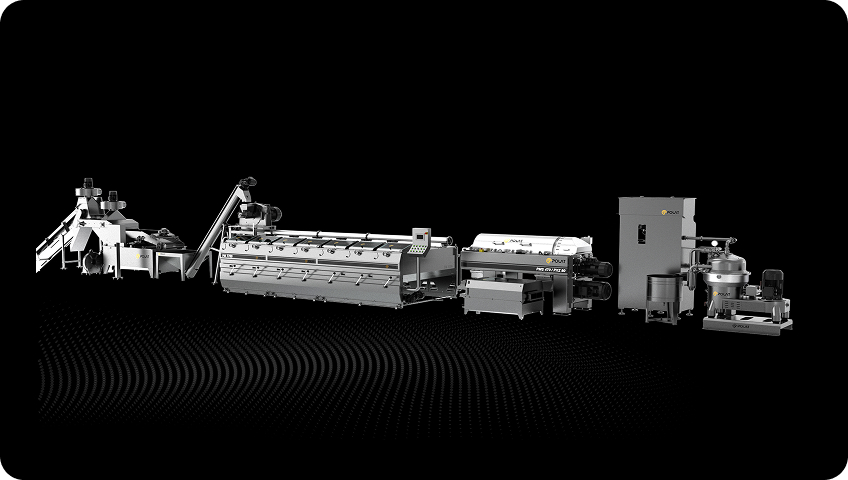
At the forefront of these solutions are advanced treatment technologies. Sustainability can be effectively achieved particularly by dewatering wastewater generated during production processes—thereby recovering purified water and producing sludge cake for reapplication across various industries.

That water is an indispensable part of our lives is an "indisputable" truth. However, this is not merely because it is a fundamental substance required for daily consumption (2 liters per day) to sustain life or for hygiene purposes.
From the computer you are using to read this article to the coffee you are sipping (in addition to the water used to brew it), water is consumed during the production or cultivation phase of every product we use and consume. When we add the volume of water used in manufacturing and growing these products to our daily direct consumption, our water footprint emerges.
What Is a Water Footprint?
A water footprint consists of 3 components: blue water footprint, green water footprint, and grey water footprint.
Blue water footprint represents surface and groundwater (freshwater) consumed during product manufacturing or crop cultivation.
Green water footprint refers to rainwater utilized during these processes.
Grey water footprint denotes the volume of freshwater polluted throughout the production and cultivation lifecycle.
To illustrate: producing one kilogram of beef requires approximately 15,400 liters of water—94% of which consists of green water, 4% blue water, and 2% grey water.
Based on average data collected between 1996 and 2005, the total annual water consumed globally—representing the world's annual water footprint—was calculated at 9,087 Gigameters³ (1 Gm³ = 1,000,000,000,000,000,000,000,000,000 m³). Of this total volume, 74% was green, 11% blue, and 15% grey water footprint. Agricultural production accounted for a staggering 92% of this massive pie.
Considering the changes in population and consumption habits since those years, it is easy to infer that our planet's annual water footprint has increased significantly. To support this thesis, we can note that producing a single semiconductor chip—the backbone of modern electronics—requires approximately 8,300 liters of water.
Virtual Water
As noted, the water footprint encompasses both direct daily water usage and the "invisible" water used behind the scenes during product manufacturing. This hidden water consumption is termed "Virtual Water."
The concept of virtual water covers all water consumed across every stage of a product's lifecycle. For instance, in the case of coffee: from growing the coffee plant to the moment the consumer brews a single cup, the virtual water used totals roughly 140 liters, whereas direct water usage is merely one cup (about 250 ml).
The pioneer of the "virtual water" concept, Tony Allan, began his research when investigating why expected wars or civil conflicts over water scarcity in the Middle East had not erupted. His findings revealed that despite severe water deficits, nations in the region sustained themselves through large-scale food trade. Consequently, he realized these countries were importing not just physical goods, but the embedded water used to produce them—thus coining the term virtual water.
Virtual water is embedded not only in trade by water-scarce nations, but in all international commerce. Between 1996 and 2005, the annual virtual water flow via global agricultural and industrial trade was estimated at 2,320 Gm³ (68% green, 13% blue, and 19% grey water footprint). While virtual water mobility is essential for countries experiencing or facing water stress, data indicates that the water footprint generated by this trade relies heavily on blue and grey water footprints. In short, international virtual water trade exerts greater pressure on surface and groundwater resources while increasing pollution.
What Must Be Done?
As water resources steadily decline while humanity collectively expands its water footprint, we will soon face severe production bottlenecks and acute drinking water shortages. While halting international trade or microchip manufacturing is clearly unfeasible, reducing our global footprint remains achievable through measures applied at both industrial and individual levels.
Individual actions are straightforward. First and foremost, cultivating mindfulness around water conservation is essential. Furthermore, curbing consumerism and buying only what is necessary can yield a profound impact. For instance:
Producing a single t-shirt consumes approximately 2,720 liters of water (54% green, 33% blue, 13% grey).
Producing a single pair of jeans consumes 10,850 liters (45% green, 41% blue, 14% grey).
At the industrial production level, advanced treatment technologies stand at the forefront. Sustainability can be effectively achieved by dewatering wastewater generated during production—recovering purified water and producing sludge cake for resource reuse across various sectors. Purified water can be redirected for agricultural irrigation. Meanwhile, processed sludge cake can be incinerated to generate biogas, and the resulting ash can be utilized in the chemical industry.